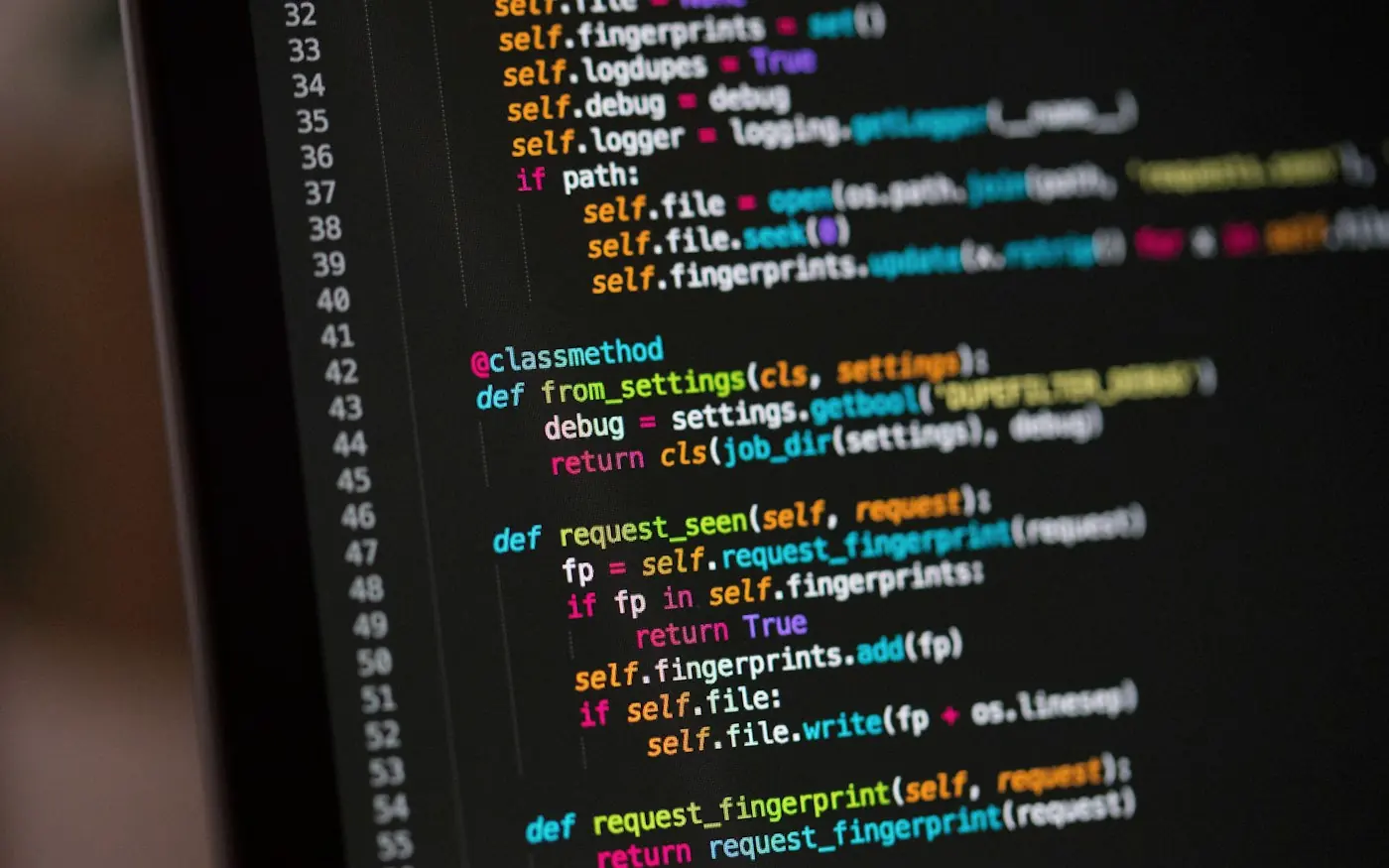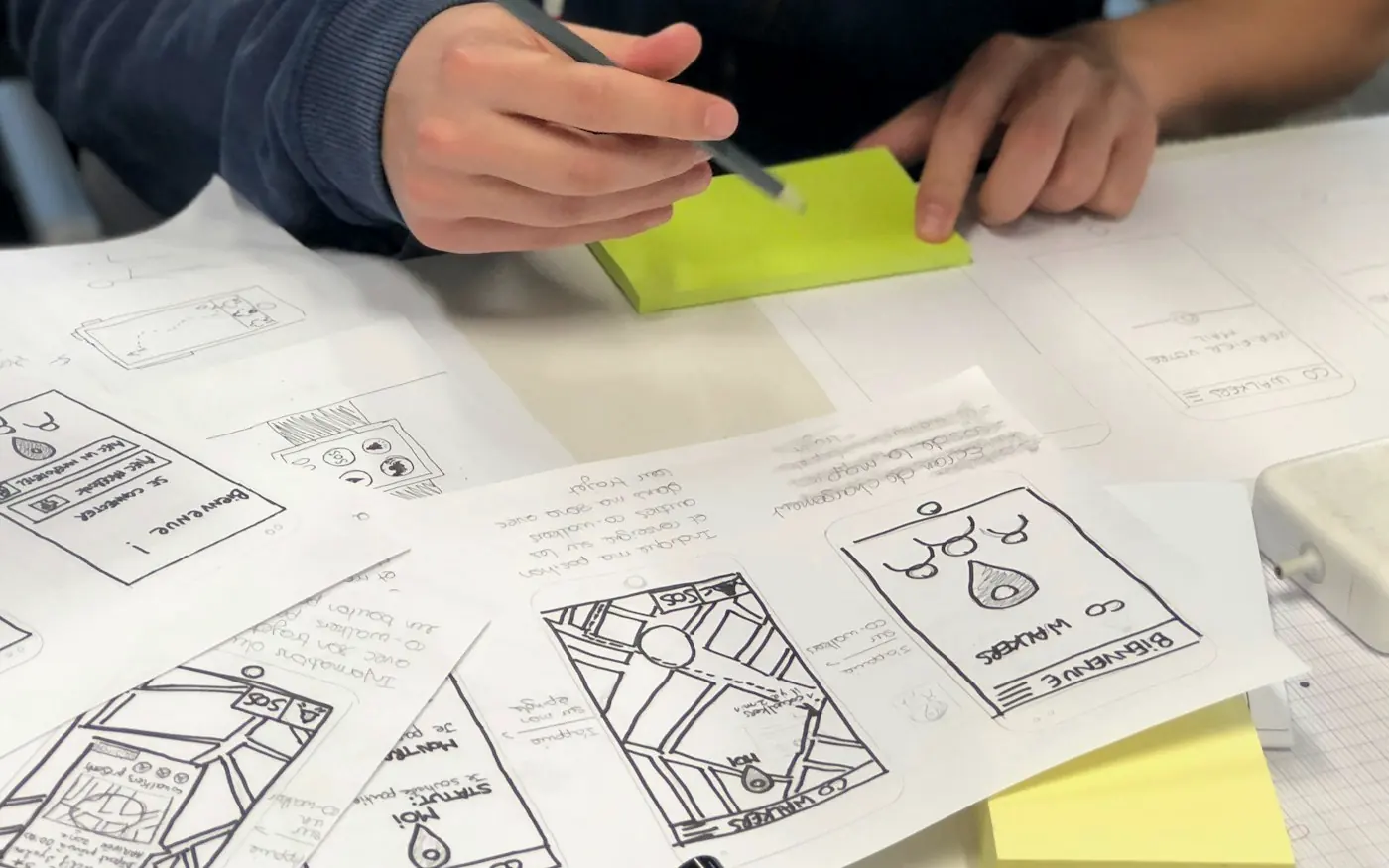



Building software has traditionally required a team of developers, considerable technical knowledge and a budget that many aspiring founders simply cannot afford. AI is changing that equation. But making software is one thing. Making it work properly is an entirely different challenge.
The idea was the easy part
There is something quite interesting about having an idea that you genuinely believe could become a useful product. You start imagining what it might look like, how people would use it and, perhaps more importantly, the problem it could solve. Then reality sets in. How do you actually build it?
For a long time, developing a sophisticated software application meant having access to experienced software engineers, designers, infrastructure specialists and, depending on the product, a fairly substantial development budget. Even if you understood exactly what you wanted to build, translating that vision into a working application was another matter.
I've spent years working around creativity, digital experiences, design and business solutions. I understand how products should look, how people interact with them and why certain decisions can make or break a digital experience. But understanding the principles of building a good product doesn't automatically mean you know how to engineer one.
That distinction became particularly interesting when I decided to build a SaaS product using AI tools. I wasn't simply experimenting with a chatbot or asking AI to generate a few lines of code. I wanted to build something considerably more ambitious: a functional business application with interconnected features, different workflows, data management and intelligent capabilities. I wanted to see how far I could take the technology.
And I discovered that I could take it much further than I initially expected. But not without a few surprises.
The moment I realised AI could change software development
My approach was different from the traditional development process. Rather than beginning with a team of developers and a lengthy technical specification, I started exploring what could be achieved through AI-assisted development.
The idea was relatively straightforward. I would describe what I wanted, explain how the different parts of the application should behave, review what AI produced and continue refining the product until the pieces started working together.
It sounds simple when explained that way. In practice, it requires considerably more thought. One of the things that impressed me was how quickly AI could translate an idea into something tangible. I could describe an interface, explain a workflow or request a particular feature and see an implementation take shape.
For someone who has spent years thinking about digital products, this was particularly exciting. Ideas that might previously have required several conversations with developers could now be explored directly. I could experiment with different approaches, challenge the implementation and make adjustments without having to wait for someone else to interpret every instruction.
It changed the relationship between having an idea and actually building it. But there was an important distinction I would come to appreciate: AI could help me build a feature, but that didn't necessarily mean it understood the entire product. And that became one of my biggest challenges.
Building a SaaS product is not the same as building a collection of features
This is probably one of the most important lessons I learnt. When you look at a software application, you see its interface. You see the buttons, dashboards, forms, menus and reports. Everything appears to exist in one coherent environment.
Behind that interface, however, there is a much more complicated relationship between different parts of the system. A feature rarely exists in isolation.
Consider a relatively simple business workflow. A user records a transaction. That transaction might affect sales records, inventory, customer balances, financial reports and other parts of the application.
If one part of the system doesn't receive the correct information, the problem can extend beyond the original action. The application might look perfectly fine, yet the information displayed elsewhere could be incorrect.
- Problem and idea
- Product architecture
- AI-assisted build
- Testing and validation
- Real-world use
A simplified product development journey. The stages overlap in practice, and each one needs human judgement, review and feedback.
This is where I began to appreciate the difference between developing individual features and engineering a complete product. AI can generate a screen that looks convincing. It can also produce a function that appears to work. But the real test is whether everything behaves consistently when the application is used as a complete system.
I found myself thinking less about individual features and more about how information moved throughout the application. What happens when a user changes something? Where should that information be reflected? What happens if an operation fails? Does the application actually save the change? Will another module recognise it?
These questions are not particularly glamorous, but they are the difference between a convincing prototype and a product that people can rely on.
The problems nobody really prepares you for
If you follow conversations about AI development online, you might get the impression that building software has become almost effortless.
Describe what you want. Generate the code. Make a few adjustments. Launch. I wish it were that straightforward. My experience has been considerably more interesting, and occasionally frustrating.
1. AI doesn't always remember what you've already built
One of the biggest challenges with AI-assisted development is maintaining consistency as an application grows. At the beginning, everything feels relatively manageable. You explain the requirements, AI generates the implementation and you move on to the next feature.
But as the application becomes more complex, the instructions become more demanding. A new feature might depend on something developed several stages earlier. A change in one area might affect another. Sometimes, an implementation that previously worked needs to be revisited because a later modification has introduced an unexpected problem.
I began to understand that building a large application requires more than giving AI a sequence of instructions. It requires a clear understanding of the product's architecture, its data relationships and the responsibilities of each module.
Without that understanding, development can become a cycle of fixing one thing and unintentionally breaking another.
2. A successful response doesn't always mean a successful operation
This was another particularly important discovery. Imagine asking an AI-powered application to update a product price. The application responds positively. It tells you the change has been made. You move on, assuming everything is fine. But what if the underlying information was never actually saved?
I encountered situations where the application appeared to acknowledge an operation without the expected change being properly reflected in the saved data.
This highlighted something that I believe every person building AI-powered software should understand.
An AI system saying it has completed an action is not proof that the action has actually been completed.
There must be a reliable mechanism for carrying out the operation, confirming that it succeeded and reporting the actual result. This is particularly important when building applications that handle business information. A friendly conversational response is useful, but accuracy and consistency matter considerably more.
3. AI can introduce new problems while trying to solve existing ones
Another interesting experience was discovering that an apparently reasonable modification could sometimes create an entirely different problem.
You ask AI to improve a particular part of the application. It makes the requested changes, but something that previously worked no longer behaves as expected.
Sometimes the issue is obvious. Other times, you only discover it after testing another part of the system. This can become frustrating, particularly when you're working on an application with several interconnected components.
It taught me to be more deliberate about changes. Rather than assuming that every successful modification is an improvement, I needed to consider what else might be affected and test the surrounding functionality.
In software development, fixing the immediate problem is not always enough. You also need to make sure you haven't created another one.
4. The development environment doesn't always cooperate
There were also moments when the technology itself became an obstacle. I encountered development interruptions, server connection problems and periods when the development environment simply wasn't cooperating.
These are not necessarily problems with the product's logic, but they can interrupt the entire development process. When you're working with AI tools, it's easy to assume that the technology will remain available and responsive whenever you need it. That isn't always the case.
You still need patience, a sensible development workflow and, ideally, a way to protect your work and recover when something goes wrong.
The part I underestimated: Testing
If I were to identify one area that deserves considerably more attention in AI-assisted software development, it would be testing.
Getting a feature to work once is not the same as proving that it works reliably. A button might perform the expected action during one test and fail under slightly different circumstances. A form might accept information but not save it correctly. A report might display figures without accurately reflecting the underlying transactions.
These are the kinds of problems that can remain hidden if you only test the happy path. I gradually became more conscious of the need to test not just individual features but the relationships between them.
Does a change in one module appear correctly in the other relevant modules?
Does the application behave properly when information is incomplete?
What happens when a user attempts an operation they don't have permission to perform?
Does the system handle failed operations appropriately?
Are calculations and reports consistent with the underlying records?
Does the application retain changes after the user leaves and returns?
These questions are particularly important when developing software that people will depend on to manage real business activities.
A product can look impressive during a demonstration and still be unreliable in everyday use.
So, what did it actually cost?
This is probably the question most people want answered. And understandably so. One of the attractions of AI-assisted development is the possibility of reducing the financial barriers traditionally associated with software development.
However, I would be reluctant to suggest that building a SaaS product with AI is free, or that the cost can be measured simply by adding up a few software subscriptions. There are several components to consider.
| Cost area | Amount | Basis | First year |
|---|---|---|---|
| AI development tools | £18 | Monthly subscription | £216 |
| Hosting and infrastructure | £5 | Monthly | £60 |
| APIs and external services | £4 | Monthly, mostly testing | £48 |
| Domain and email | £35 | Yearly | £35 |
| First-year total | £359 |
Figures cover the first twelve months of the build. Card payment fees are charged per sale, so they aren't included here.
There is also something people often overlook: the cost of your own time. You might not be paying a traditional software development team, but you are still investing hours into understanding the technology, writing instructions, reviewing implementations, testing features and resolving problems. That time has value.
For me, one of the most interesting aspects of this experience has been seeing how much of the traditional development process can be accelerated by AI, while also recognising how much human judgement remains necessary.
AI can reduce the cost of getting started. It doesn't automatically eliminate the cost of getting things right.
In total, the first year cost me about £359. For comparison, a UK agency would usually quote somewhere between £40,000 and £80,000 to build a product like this. The bigger cost was my time: roughly 1,000 hours of evenings and weekends spent describing, reviewing, testing and fixing.
What I would do differently if I started again
Looking back, there are several things I would approach differently.
First, I would spend more time establishing the product architecture before developing individual features. It is tempting to start building immediately, particularly when AI makes it possible to see results so quickly. But a little more planning can prevent considerable rework later.
Second, I would establish stricter rules around data management. Every module needs to understand where its information comes from, how it is updated and which parts of the system depend on it. This becomes increasingly important as the application grows.
Third, I would introduce more systematic testing much earlier. Rather than treating testing as something that happens towards the end, I would make it part of every development stage.
Fourth, I would be much more deliberate about documenting the application. AI-assisted development can become difficult to manage when the system grows and previous decisions are no longer clearly understood. A proper record of the architecture, requirements and changes makes a significant difference.
Finally, I would spend more time distinguishing between what AI can generate and what the application actually needs to do. They are not always the same thing.
Has AI made software development easier?
Yes. But I think the more interesting question is whether it has made software development easier for everyone. My experience suggests that AI has lowered the barrier to experimentation and made it possible for people without traditional software engineering backgrounds to participate much more directly in building digital products. That is significant.
Someone with a strong understanding of a business problem can now explore possible technical solutions without necessarily having to begin by assembling an entire development team.
A creative professional can experiment with ideas that might previously have remained sketches or concepts. An entrepreneur can explore a product opportunity before committing substantial resources to traditional development.
But there is a danger in interpreting this progress as evidence that technical expertise is no longer important. It is not. Understanding databases, security, architecture, integrations, data integrity and application behaviour still matters. In some ways, it matters even more because AI can generate implementations that look convincing without necessarily being appropriate or reliable.
The ability to ask AI to build something is useful. The ability to recognise when what it has built is wrong is arguably even more valuable.
The biggest lesson wasn't about AI
When I started this journey, I was interested in discovering how far AI could take me in building a SaaS product. I certainly discovered that it could take me a long way.
But the biggest lesson wasn't about the tools themselves. It was about the relationship between ideas, knowledge and execution. Having an idea is important. Understanding the problem is even more important. And being able to evaluate the solution, recognise its weaknesses and keep improving it is what makes the difference.
AI has changed the possibilities available to people who want to build software. I don't think we have fully understood the implications yet.
However, I would caution anyone who believes that building a commercial application is now simply a matter of describing an idea to an AI tool.
The technology can help you move faster, but it cannot take responsibility for every decision you make. You still need to know what you're building, why you're building it and whether the finished product actually does what it promises.
The future of software development may not belong exclusively to those who know how to write the most code. It may increasingly belong to those who understand the problems worth solving, know how to use the available tools and have the judgement to turn an idea into something that genuinely works.
A final thought
Building something is one experience. Putting it in the hands of real users, learning from their behaviour and taking responsibility for the product is another.
I'm still interested in exploring that journey, sharing what works, what doesn't and the lessons that come from trying things that aren't always straightforward.
Because there is a lot more to building technology than the finished screen. And sometimes, the most valuable lessons are found in everything that happened before it.
Have an idea for a digital product?
The best solutions begin with understanding the problem. Whether you're exploring a new digital product, rethinking an existing platform or looking to bring a business idea to life, let's talk about what might be possible.

UX/UI designer and developer in Birmingham, UK. I design and build digital products for SaaS, fintech and public sector teams.