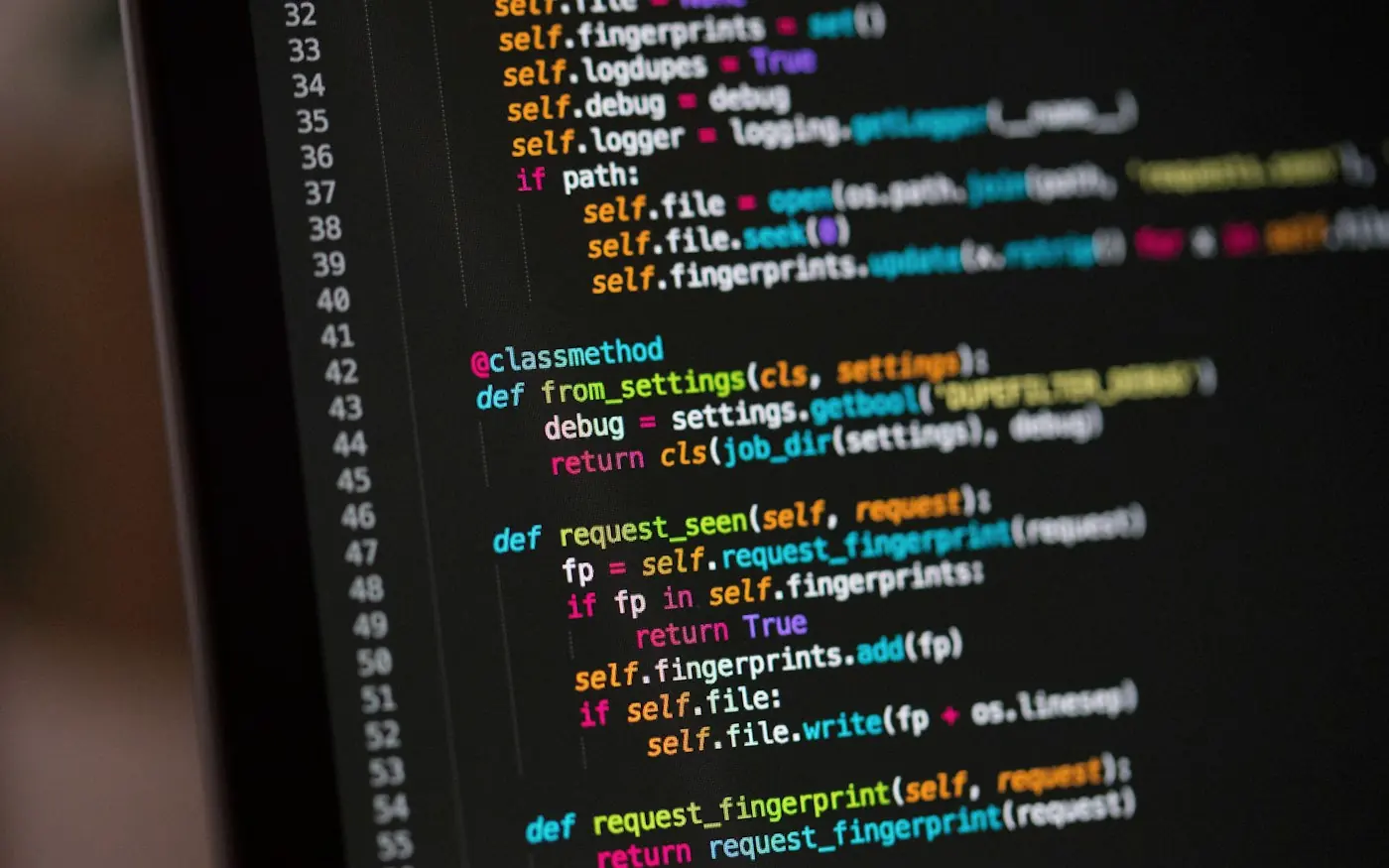


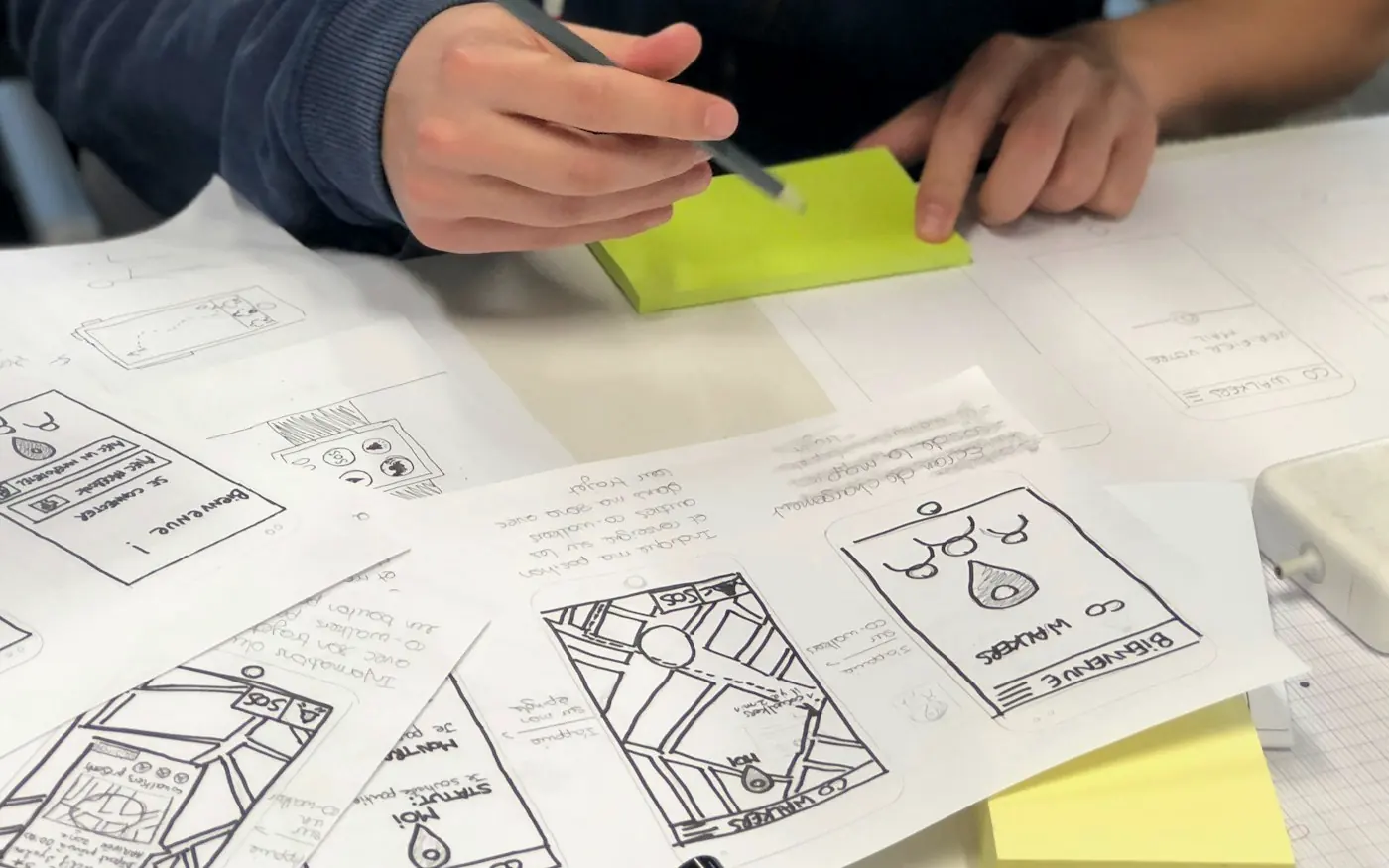
Building an impressive AI demo has never been easier. Building a reliable, secure and commercially viable AI digital product is an entirely different challenge. Discover what it takes to take artificial intelligence from concept to production.
Executive Summary: Turning Generative AI Into Commercial Software
AI has transformed the speed of prototyping, but transitioning from an experimental demo to a production-ready digital product demands comprehensive UX architecture, deterministic guardrails, sub-second latency, rigorous permission models, and enterprise security.
AI has changed the speed at which businesses can turn an idea into something they can actually see and interact with. A concept that might once have required weeks of planning, design and development can now become a surprisingly convincing prototype in a matter of hours. A few well-written prompts, an AI coding assistant and a modern development environment can produce a working interface, connect an API and demonstrate an AI feature before the coffee has gone cold. It is genuinely exciting. But there is a catch, and it is an important one: a working AI demo is not the same thing as a production-ready digital product.
This distinction is becoming increasingly important as businesses move beyond experimenting with generative AI and start asking what they can actually build with it. A prototype can demonstrate that an AI model can answer questions, summarise information, generate content or automate a task. A real product needs to do much more. It needs to handle real users, real data, real permissions, real failures and real business expectations. It needs to be understandable, secure, observable, maintainable and capable of evolving as usage increases. In other words, the difficult part is rarely getting AI to do something impressive. The difficult part is designing everything around it so that the thing remains useful when the demo becomes a business.
At CreativeIyke, we see AI as part of a broader digital product architecture rather than a feature that can simply be dropped into an existing website. Our Intelligent AI Integrations capability brings generative AI, intelligent automation and modern software engineering together, while our Human-Centred UX/UI Design approach ensures that the technology remains useful and understandable to the people interacting with it. The objective isn't to build something that looks clever in a demonstration. It is to create something that solves a meaningful problem and can survive contact with the real world.
The AI Demo Is the Easy Part
The first version of an AI product can be deceptively impressive. Imagine a business wants to build an AI assistant that answers questions about its internal documents. A developer can connect a language model to a simple interface, upload a few files, send the user's question to the model and display the response. Suddenly there is an AI assistant sitting in front of the team, apparently ready to transform the business.
Then reality arrives.
What happens when two hundred employees use it simultaneously? What happens when the model confidently gives the wrong answer? What happens when a user asks about information they are not authorised to see? What happens when an uploaded document contains sensitive information? What happens when the AI service becomes unavailable? What happens when the cost of API usage increases dramatically? What happens when the company needs an audit trail showing why a particular response was generated? What happens when the business needs to integrate the assistant with its CRM, accounting platform, customer database or internal systems?
Those questions don't make the AI less exciting. They reveal what building a real product actually involves.
What Users See vs What Makes It Work
ABOVE THE WATERWHAT USERS SEE (Visible AI Layer)
BELOW THE WATERWHAT MAKES IT WORK (Production Architecture)
Caption: The AI feature may be the most visible part of the product, but much of the engineering and design effort exists beneath the surface.
What Makes an AI Web Application Production-Ready?
A production-ready AI application is not defined simply by whether artificial intelligence is present. It is defined by whether the entire system can reliably deliver value to its intended users. That requires several disciplines to work together: product strategy, UX, software architecture, AI engineering, security, data management, testing and ongoing optimisation. If one of those areas is neglected, the quality of the overall product can suffer even when the AI model itself is extremely capable.
This is where businesses sometimes make an expensive mistake. They focus heavily on selecting the "best" AI model while treating everything around it as secondary. But model capability is only one component of the experience. A brilliant model inside a confusing interface is still a poor product. A sophisticated AI assistant connected to unreliable data is still unreliable. A powerful system with no permission model can become a security liability. And a technically impressive application that doesn't solve an important user problem is simply an impressive way of spending money.
A useful way to think about an AI-powered web application is as a series of connected layers, each of which has a different responsibility.
Six Connected Architectural Layers
Caption: A successful AI application is a connected system, not simply an AI model wrapped in a user interface.
Start With the Problem, Not the AI
Before deciding whether a business should use an AI agent, chatbot, voice assistant or automated workflow, there is a more fundamental question to answer: what problem are we trying to solve? This sounds obvious, but the excitement around AI can make businesses reverse the normal product-development process. Instead of starting with a user or operational problem and identifying the best solution, teams can start with a new technology and then search for something to use it for.
That approach can produce interesting experiments, but it rarely produces the strongest products. A business doesn't necessarily need an AI assistant because AI assistants are popular. It needs one if there is a meaningful problem that conversational interaction, reasoning, generation, classification, prediction or automation can solve more effectively than the existing approach.
For example, imagine a professional services company spending several hours every week producing client reports. The interesting question isn't, "How can we add AI to our reporting platform?" It is, "Which parts of this process require human judgement, and which parts involve repetitive information gathering, analysis or drafting?" AI may then have a very specific role in reducing the administrative burden while keeping humans responsible for decisions that require expertise.
This is the essence of CreativeIyke's Solution First philosophy. Technology should follow the problem. We start with discovery, understand the users and business objectives, examine the existing technical environment and then determine where AI can create genuine value rather than simply adding novelty.
AI Needs Good Data More Than Good Marketing
One of the least glamorous parts of an AI product can also be one of the most important: data. Businesses can spend considerable time discussing models, prompts and interfaces while overlooking the quality, structure and accessibility of the information the AI actually needs to work with.
An AI assistant designed to answer questions about company policies is only as useful as the information available to it. If documents are outdated, duplicated, poorly structured or contradictory, the AI has a difficult problem to solve. Even a highly capable model cannot magically transform unreliable source material into reliable business knowledge. The application needs a deliberate strategy for how information is collected, processed, stored, retrieved and updated.
This becomes even more important when an AI application works with private or sensitive information. A business needs to understand what data is being processed, where it is stored, who can access it, what third-party services receive it and how long it is retained. These are product and architecture decisions, not things that should be added to a checklist just before launch.
Key Differences Across Twelve Architectural Areas
| Area | AI Demo | Production Product |
|---|---|---|
| Data | Sample information | Controlled, reliable real-world data |
| Users | Small test group | Defined user base and permissions |
| Security | Basic | Designed into the architecture |
| AI output | Demonstration | Evaluated and monitored |
| Errors | Often ignored | Handled deliberately |
| Integrations | Basic or mocked | Reliable production integrations |
| Performance | Limited testing | Load and performance considerations |
| Cost | Usually negligible | Monitored and controlled |
| Analytics | Optional | Product and usage insight |
| Auditability | Rarely considered | Important where decisions/actions matter |
| Accessibility | Often overlooked | Designed into the experience |
| Maintenance | Prototype mindset | Continuous product lifecycle |
Caption: The gap between an AI demo and a production product is largely the work required to make the system reliable, secure and useful at scale.
Designing AI Experiences People Can Actually Understand
AI introduces a different kind of UX challenge because the interface is no longer always predictable. A conventional website can be designed around defined states. A user clicks a button, completes a form or follows a navigation path, and the product responds according to known rules. AI systems can generate different responses to similar inputs, which means the experience needs to account for uncertainty.
Users therefore need appropriate feedback and control. If an AI system is processing a request, the interface should communicate what is happening. If the system cannot answer confidently, the experience should make that limitation understandable rather than pretending otherwise. If an AI action changes something in the user's account, the user may need an opportunity to review or confirm it. If the system has made an assumption, that assumption may need to be visible.
This becomes particularly important when AI moves beyond conversation and starts taking actions. An assistant that tells a user what their sales were last month is one thing. An assistant that can create an invoice, change an inventory price, send an email or modify an accounting record is something else entirely. The UX needs to establish appropriate levels of confidence, confirmation and accountability.
Progressive Control & Accountability Spectrum
Caption: As AI moves from providing information to taking action, the product needs stronger controls, permissions and feedback mechanisms.
AI Should Not Hide the User's Way Out
One of the more subtle problems with AI interfaces is that they can encourage organisations to make everything conversational. It can be tempting to place a large chat box in front of the user and assume that natural language will solve the complexity of the underlying product. Sometimes it does. Sometimes it simply hides the complexity until the user becomes frustrated.
A good AI experience should not force users to have a conversation when a conventional interface would be faster. If someone needs to select a date, a calendar may be better than asking an AI to interpret "next Thursday afternoon". If a manager needs to compare twelve figures, a well-designed dashboard may be more useful than a paragraph generated by a language model. If a user needs to complete a structured application, a carefully designed form can provide much greater clarity than an open-ended conversation.
The strongest AI products therefore tend to combine AI with conventional interaction patterns rather than replacing everything with chat. AI can interpret, recommend, summarise, generate and automate while familiar interface components provide structure, transparency and control. The result is often more powerful because the technology is being used where it genuinely improves the experience.
Building Guardrails Into the Product
AI systems can make mistakes. That isn't a secret, and pretending otherwise is one of the fastest ways to undermine trust in an AI product. The goal of good product engineering isn't necessarily to promise that an AI system will never be wrong. It is to design the system so that errors are less likely, easier to detect and less damaging when they occur.
Guardrails can take many forms depending on the product. They may include input validation, controlled prompts, retrieval from approved sources, permission checks, structured outputs, confidence thresholds, human approval steps or restrictions on what the AI is allowed to change. In some environments, it may also be appropriate to log actions and provide users with a clear record of what the system did.
The appropriate level of control depends heavily on risk. An AI tool generating social media ideas does not require the same safeguards as an AI system interacting with financial records or sensitive healthcare information. The important thing is that risk is considered during architecture rather than after the product has already been built.
AI Agents Need More Than a Prompt
The term AI agent has quickly become part of the digital product vocabulary, but there is a risk that the term makes complex systems sound simpler than they are. An agent that can reason about a task, access tools, retrieve information and take actions is considerably more involved than a chatbot that simply generates text.
An agentic system may need to decide which tool to use, determine what information it requires, maintain context, handle failed actions, respect permissions and know when it should stop. If the agent is connected to external systems, each integration becomes part of the risk and reliability equation. A system that can read information is different from one that can change information, and a system that can change information automatically requires a much stronger architecture around it.
Chatbot → Copilot → Agent → Autonomous Workflow
01 ChatbotAnswers questions.
02 CopilotAssists the user with a task.
03 AgentPlans and executes a defined workflow.
04 Autonomous WorkflowPerforms recurring actions under predefined rules and monitoring.
Caption: The more autonomy an AI system has, the more important permissions, guardrails, observability and human oversight become.
Where AI Can Create Genuine Business Value
The most useful AI applications often don't look like science fiction. They solve mundane, expensive and repetitive problems that businesses have tolerated for years because the existing process was "good enough". That might mean automatically classifying incoming enquiries, extracting information from documents, generating first drafts of reports, summarising customer interactions, assisting internal teams with knowledge retrieval or identifying patterns in large datasets.
These use cases are attractive because their value can be measured. If an organisation currently spends forty hours a week manually processing information and an AI-assisted workflow reduces that to fifteen, there is a tangible operational benefit. If customer support teams can resolve more enquiries without compromising quality, there is a measurable improvement. If employees can find information in seconds instead of searching through dozens of documents, productivity increases.
The strongest AI strategy therefore begins with business economics rather than technological excitement. Where is time being lost? Where are errors occurring? Where is information difficult to access? Where are teams repeating the same task? Where could faster decision-making create commercial value? Those questions can reveal much better AI opportunities than simply asking where the business could add a chatbot.
2�2 Business Impact vs Implementation Complexity
- ✓ Document summarisation
- ✓ Content generation
- ✓ Internal knowledge search
- ✓ AI customer support
- ✓ Intelligent workflow automation
- ✓ AI-powered reporting
- âš Autonomous financial actions
- âš Clinical decision support
- âš Multi-system autonomous agents
Caption: Not every AI opportunity deserves immediate investment. Prioritise the areas where business value and feasibility intersect.
From Prototype to Production: CreativeIyke's Four-Stage Approach
Turning an AI idea into a reliable product requires the same discipline we apply to other complex digital products. Our process begins with Audit, because understanding the problem, users, technical landscape and constraints gives us the foundation for making better decisions. We then move into Architect, where user journeys, system architecture, integrations and data requirements are defined before development begins.
The Build stage brings the product together through frontend and backend engineering, cloud infrastructure, third-party service integrations, testing and quality assurance. AI functionality sits within that architecture rather than being treated as an isolated feature. Depending on the project, this might involve generative AI APIs, intelligent automation, retrieval systems, agent workflows, voice interfaces or other AI capabilities.
Once the product is live, Optimise becomes the next stage. We examine performance, analytics, user behaviour and feedback to understand what is working and where the product needs refinement. AI systems in particular benefit from this iterative approach because real-world usage can reveal patterns, edge cases and failure modes that were difficult to anticipate during development.
Four-Stage Lifecycle
01 AUDITProblem • Users • Data • Feasibility • Risk
02 ARCHITECTUX • AI Strategy • Architecture • Integrations
03 BUILDFrontend • Backend • AI • Infrastructure • Testing
04 OPTIMISEAnalytics • Feedback • Performance • Continuous Improvement
Caption: From the first product question to post-launch optimisation, AI development should be treated as a product discipline rather than a standalone technology exercise.
The Technology Stack Matters, But It Is Not the Strategy
Modern AI-assisted development has made it possible to build products using an increasingly sophisticated combination of tools. Developers can work with modern frontend frameworks, serverless infrastructure, cloud platforms, databases, AI APIs and coding assistants that accelerate implementation. This is changing the economics of software development, particularly for smaller businesses that previously found bespoke software prohibitively expensive.
But faster development does not eliminate the need for product thinking. In some cases, it makes that thinking even more important because the ability to produce code quickly can create a false sense of progress. If a team can generate a large amount of functionality in a short period, it becomes easier to build features before deciding whether those features should exist.
At CreativeIyke, we see modern AI-assisted development as an accelerator rather than a replacement for design judgement, architecture and engineering discipline. AI can help us explore ideas, prototype interactions, write and refactor code, analyse problems and accelerate development. Human judgement remains responsible for deciding what should be built, why it should be built, how it should work and whether it is actually ready to put in front of users.
The Difference Between "It Works" and "It's Ready"
A prototype proves that something is possible. A production product proves that it can be trusted.
That difference is easy to overlook when an AI application works beautifully during a demonstration. The founder sees the response generated from the prompt and immediately imagines thousands of customers using it. The investor sees the prototype and imagines the market opportunity. The development team sees the code and imagines the next feature. Everyone can see the potential. What is less visible are the decisions required to turn that potential into something dependable.
Production readiness means asking uncomfortable questions before users are forced to answer them for you. Can the system recover from failure? Is the data protected? Can users understand what the AI is doing? Can the business monitor performance? Can the architecture cope with growth? Are permissions enforced correctly? Can the team diagnose a problem when something goes wrong? Can the product be maintained six months from now when the original developer is working on something else?
Those questions may not make a particularly exciting product demonstration. They are nevertheless the questions that separate a clever experiment from a serious digital product.
AI Is the Capability. The Product Is the Experience Around It.
The most successful AI-powered web applications will not necessarily be the ones with the most impressive models. They will be the ones that use AI to make a meaningful experience simpler, faster, more useful or more capable. The AI itself may eventually become almost invisible, which is arguably a sign that the product has been designed well.
A customer doesn't necessarily care that a sophisticated retrieval architecture sits behind their question. An employee doesn't necessarily care which model classified their document. A business owner doesn't need to know how many tokens were used to generate a report. They care that the information is accurate enough to be useful, that the process takes less time and that they can trust the system when they need it.
That is why the future of AI-powered digital products is not simply about putting artificial intelligence into more interfaces. It is about designing systems where AI, UX, software engineering, data and business processes work together. The technology becomes part of the product rather than the product itself.
From Clever Demo to Digital Product
AI has lowered the barrier to experimentation. That is a good thing. Businesses can explore ideas faster, test assumptions earlier and build prototypes without committing immediately to enormous development budgets. But the same accessibility can create a new problem: confusing the speed of the prototype with the readiness of the product.
The journey from a clever AI demo to a production-ready application requires a different mindset. It requires understanding the problem before choosing the technology, designing around real user needs, building a reliable technical foundation, protecting data, managing AI uncertainty, integrating systems thoughtfully and continuously learning from real-world usage. None of these things make AI less exciting. They are what make its potential commercially useful.
At CreativeIyke, we believe the best AI products sit at the intersection of strategy, UX, engineering and intelligent automation. We don't simply ask what AI can do. We ask where it belongs, what problem it solves, how users should interact with it and what the business needs around it to make the solution reliable and scalable.
Because ultimately, the goal isn't to build an AI demo that makes people say, "That's impressive."
The goal is to build a digital product that makes them say, "This actually makes our business better."
READY TO TURN YOUR AI CONCEPT INTO A PRODUCTION PRODUCT?EXPLORE AI PRODUCT DEVELOPMENT WITH CREATIVEIYKE
If you have an AI prototype, agent concept or automation idea that needs to evolve into a secure, scalable and user-friendly digital product, CreativeIyke can help you design and engineer the complete system.

UX/UI designer and developer in Birmingham, UK. I design and build digital products for SaaS, fintech and public sector teams.