

AI coding assistants make creating software prototypes fast and accessible. But turning an AI-generated demo into secure, reliable, production-ready software requires deep engineering discipline.
Vibe Coding Has Changed the Conversation
There is something genuinely exciting about the current wave of AI-assisted software development. A few years ago, turning an idea into a working application could require a designer, several developers, a project manager and weeks or months of development before anyone could properly interact with the product. Today, a founder can describe an idea in plain English, work with an AI coding tool, and see a functioning interface appear remarkably quickly. What used to feel like a distant technical project can now begin to look real within hours.
That shift is what has made vibe coding such an interesting development in the software industry. The term has become associated with using natural-language instructions and AI coding tools to generate, modify and iterate software without necessarily writing every line of code manually. It lowers the barrier between having an idea and producing something tangible. For designers, founders and product teams, that is potentially enormous because experimentation becomes cheaper and faster.
But there is a catch, and it is an important one. The ability to build software quickly does not automatically mean you know what software should be built. AI can help you turn an idea into an interface, connect an API, create components, generate database logic and even troubleshoot errors. It can dramatically compress the distance between concept and implementation. What it cannot reliably do on its own is understand the full business context, the motivations of your users, the operational constraints of your organisation and the strategic reason why one solution is better than another.
That distinction is becoming increasingly important as AI-assisted development moves from experimentation into serious commercial products. The question is no longer whether AI can build an application. In many cases, it clearly can. The more valuable question is whether the application being built solves the right problem, for the right people, in a way that can remain reliable, secure and commercially useful as the business grows.
What Is Vibe Coding, Really?
At its simplest, vibe coding is a conversational approach to software development where a person describes what they want and an AI system generates or modifies the underlying code. Instead of manually writing every component, function or configuration, the developer can communicate intent through natural language and use AI to accelerate implementation. The person might say that they want a customer dashboard with authentication, a subscription system and a reporting view, and the AI can produce a substantial portion of the initial implementation.
The attraction is obvious. Traditional development involves translating an idea into technical requirements, architecture, code and testing through several layers of communication. AI-assisted development can shorten some of those steps because the person building the product can move directly between intention and implementation. You can ask for a component, inspect the result, provide feedback, ask for a change and continue iterating. For prototypes and early-stage products, this can create a development rhythm that feels almost conversational.
That does not make traditional software engineering obsolete. In fact, the more ambitious the product becomes, the more important engineering judgement can become. AI-generated code still needs to be reviewed, tested, secured, understood and maintained. A system that works beautifully in a prototype can behave very differently when hundreds or thousands of users begin relying on it, particularly when authentication, payments, sensitive data, concurrency, integrations and complex business logic enter the picture.
Speed of Creation vs Quality of Product
"Could we build this?"
Initial user hypothesis and creative possibility.
"Look, it works."
Rapid interactive prototype and visual verification.
"Does it work reliably?"
Robust architecture, edge cases, testing and security.
"Does it create measurable value?"
Scalable enterprise deployment and commercial impact.
Caption: AI can dramatically accelerate the journey from idea to prototype. The difficult work is making sure the prototype becomes a reliable, useful and scalable product.
The Prototype Trap
One of the most powerful things about vibe coding is also one of its biggest risks: it makes software look finished very quickly. A founder can describe an idea, generate a polished interface and suddenly have something that resembles a real SaaS platform. There may be dashboards, buttons, charts, login screens and even working integrations. It feels like the hardest part has already been completed because the product is visible and interactive.
This is where teams can accidentally confuse visual completeness with product readiness. A functioning screen is not necessarily a functioning service. A button that appears to save information needs reliable persistence behind it. A payment screen needs secure transaction handling. A customer dashboard needs appropriate authentication and authorisation. A reporting system needs trustworthy data. An AI feature needs safeguards against inaccurate or unexpected output. The interface is only one layer of the product.
The danger becomes greater when an AI-generated prototype accumulates feature after feature without a clear architecture. One prompt adds authentication. Another introduces payments. Another adds notifications. Another connects a third-party API. Another changes the database structure. Eventually the application may work, but nobody is entirely sure why it works, what depends on what, or what will break when the next feature is introduced.
That is the point where speed can become technical debt.
The Hardest Part Is Deciding What to Build
Before a single line of code is generated, there are decisions that require product thinking rather than coding ability. Who is the user? What problem are they experiencing? How frequently does that problem occur? What are they doing today? Why is the existing solution inadequate? What would make them change their behaviour? What does success look like for the business? Which features are essential and which are simply attractive ideas?
These questions sound obvious, but they are surprisingly easy to skip when building with AI because the feedback loop is so immediate. You can have an idea at breakfast and a working prototype by lunchtime, which creates a powerful temptation to keep building rather than stop and ask whether the thing being built deserves to exist.
A good product strategy creates boundaries. It helps a team distinguish between a genuine user need and a feature request, between an important workflow and a nice-to-have, and between a problem worth solving now and one that can wait. AI can help explore those possibilities, but the responsibility for deciding what matters still sits with the product team.
At CreativeIyke, this is why our process starts with Discovery & Audit rather than development. Before we design or build, we want to understand the problem, the users, the existing systems, the technical landscape and the constraints around the product. The objective is not to slow things down. It is to make sure the speed we gain later is being applied in the right direction.
AI Makes Bad Decisions Faster Too
There is an uncomfortable truth about AI-assisted development: AI does not remove bad product decisions. It can amplify them.
If you give an AI coding tool an unclear requirement, it will often make assumptions to fill the gaps. Sometimes those assumptions are sensible. Sometimes they are not. The resulting application may look perfectly reasonable, which makes the underlying mistake harder to notice. A human developer might stop and challenge an ambiguous requirement because they understand the business context. An AI system is more likely to make a plausible interpretation and continue.
This is particularly important when building applications with complicated workflows. Imagine a financial platform where a user can record a sale, amend a transaction, issue a refund and generate reports. The interface may be relatively straightforward, but the underlying rules are not. What happens to the ledger when a transaction is amended? Who is allowed to make the change? What gets recorded in the audit trail? How does the reporting system reflect it? What happens if the payment provider confirms the transaction but the local database fails to update?
Those are not simply coding questions. They are product, accounting, security, data and operational questions that happen to require code to implement.
The Creative Advantage: Designers Can Now Build
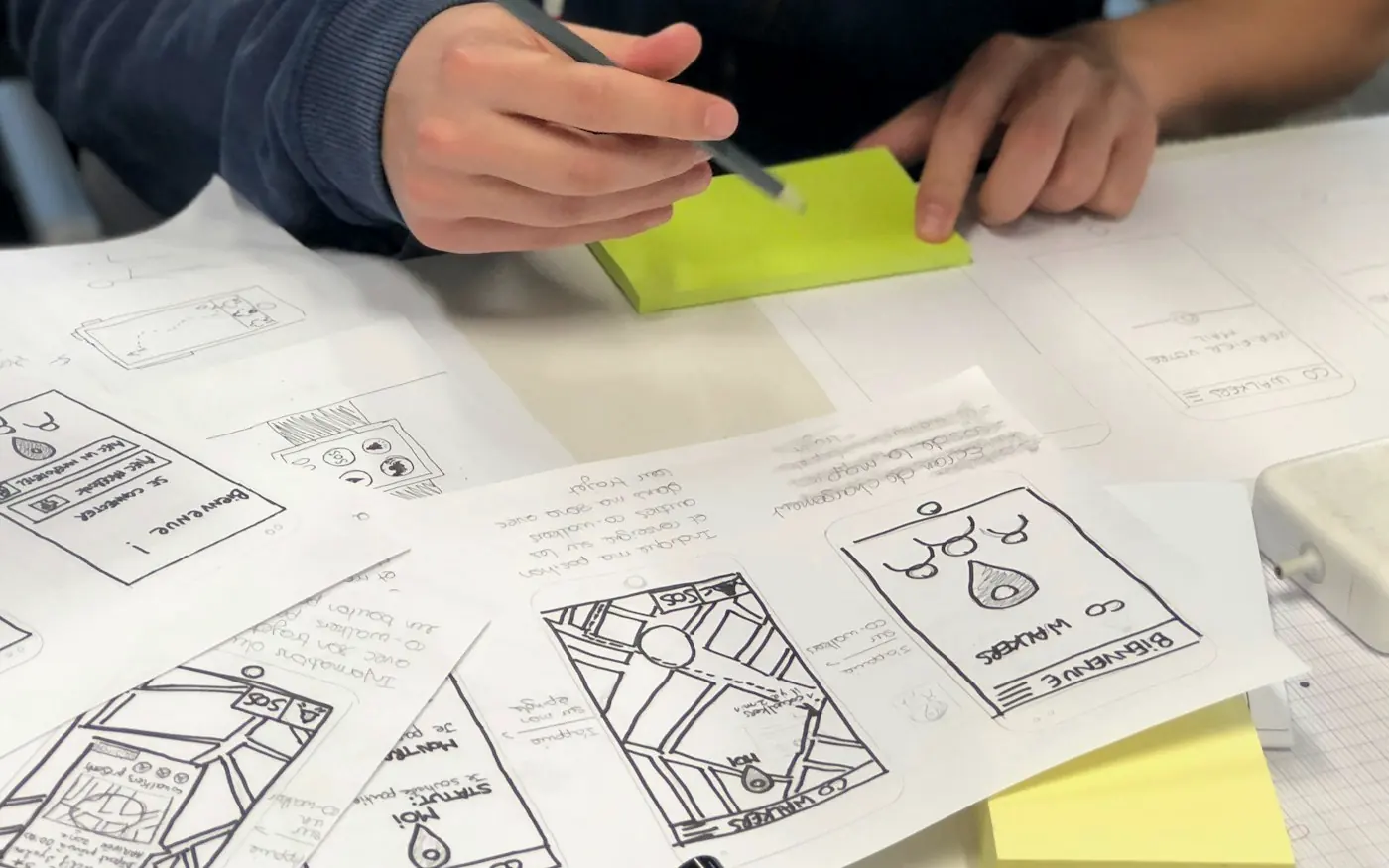
For designers, the emergence of AI-assisted development is particularly interesting because it changes the relationship between design and implementation. A UX/UI designer no longer necessarily needs to stop at a Figma prototype and hand everything over to another team before seeing whether an interaction actually works. With modern AI-assisted development tools, designers can participate much more directly in the building process.
This can create a much tighter feedback loop. Instead of designing a complex interaction in isolation and discovering during development that it is technically awkward, the designer can prototype the real behaviour earlier. Instead of debating whether a particular workflow will work, the team can build a working version, test it with users and adjust it. Design becomes less about producing static artefacts and more about shaping an evolving product.
But this does not mean design disappears because AI can generate interfaces. Quite the opposite. When interfaces become easier to produce, knowing which interface to produce becomes more valuable. AI can generate ten different dashboard layouts in minutes. The difficult part is deciding which one best supports the user's task, which information deserves attention, which interactions should be removed and how the experience should behave when something goes wrong.
That is where human-centred UX remains essential.
The New Skill Is Knowing What to Ask
AI-assisted development changes the skill equation. Knowing how to write code remains valuable, but another capability is becoming increasingly important: knowing how to communicate a product requirement precisely enough that AI can help implement it without silently inventing the rest.
A vague instruction such as "build a customer dashboard" leaves enormous room for interpretation. A stronger product specification might define the user's role, the information they need, the actions they can perform, the source of the data, the permissions involved, the expected empty states, error states, accessibility requirements and success criteria. The difference is not simply a better prompt. It is better product thinking.
Transforming Ambiguity into Precise Architecture
| Vague instruction | Product-focused instruction |
|---|---|
| "Build a customer dashboard." | "Create a dashboard for authenticated customers showing their active subscriptions, recent transactions and account status." |
| "Add payments." | "Allow authenticated customers to purchase a subscription through Stripe and show the resulting subscription status in their account." |
| "Add an admin area." | "Create role-based admin access allowing owners to manage users, subscriptions and account settings, while preventing standard users from accessing administrative functions." |
| "Make it mobile friendly." | "Design responsive layouts for mobile, tablet and desktop, with accessible navigation, readable content and touch-friendly controls." |
| "Add AI." | "Use AI to summarise customer activity while clearly distinguishing generated insights from verified transactional data." |
Caption: AI-assisted development becomes significantly more effective when the underlying product requirements are clear, testable and grounded in real user needs.
Architecture Still Matters
There is a temptation to think that AI makes architecture less important because the tool can generate the technical implementation for you. In practice, the opposite is often true. The easier it becomes to create individual features, the easier it becomes to create a collection of features that do not form a coherent system.
Architecture determines how the major parts of an application relate to one another. It influences how data moves through the system, how services communicate, how authentication works, how integrations are managed and how the application can evolve. A good architecture does not need to be unnecessarily complicated, but it needs to make deliberate choices about the structure of the product.
For example, a small MVP may not need a sophisticated microservices architecture. Introducing unnecessary complexity too early can create more problems than it solves. At the same time, a product handling sensitive financial information, complex permissions and multiple external integrations needs stronger architectural consideration than a simple marketing website. The right architecture is proportional to the problem.
This is another reason CreativeIyke separates Architect from Build in our process. Architecture is not a delay before the exciting part. It is the foundation that allows the exciting part to survive contact with reality.
AI-Generated Code Still Needs Human Judgement
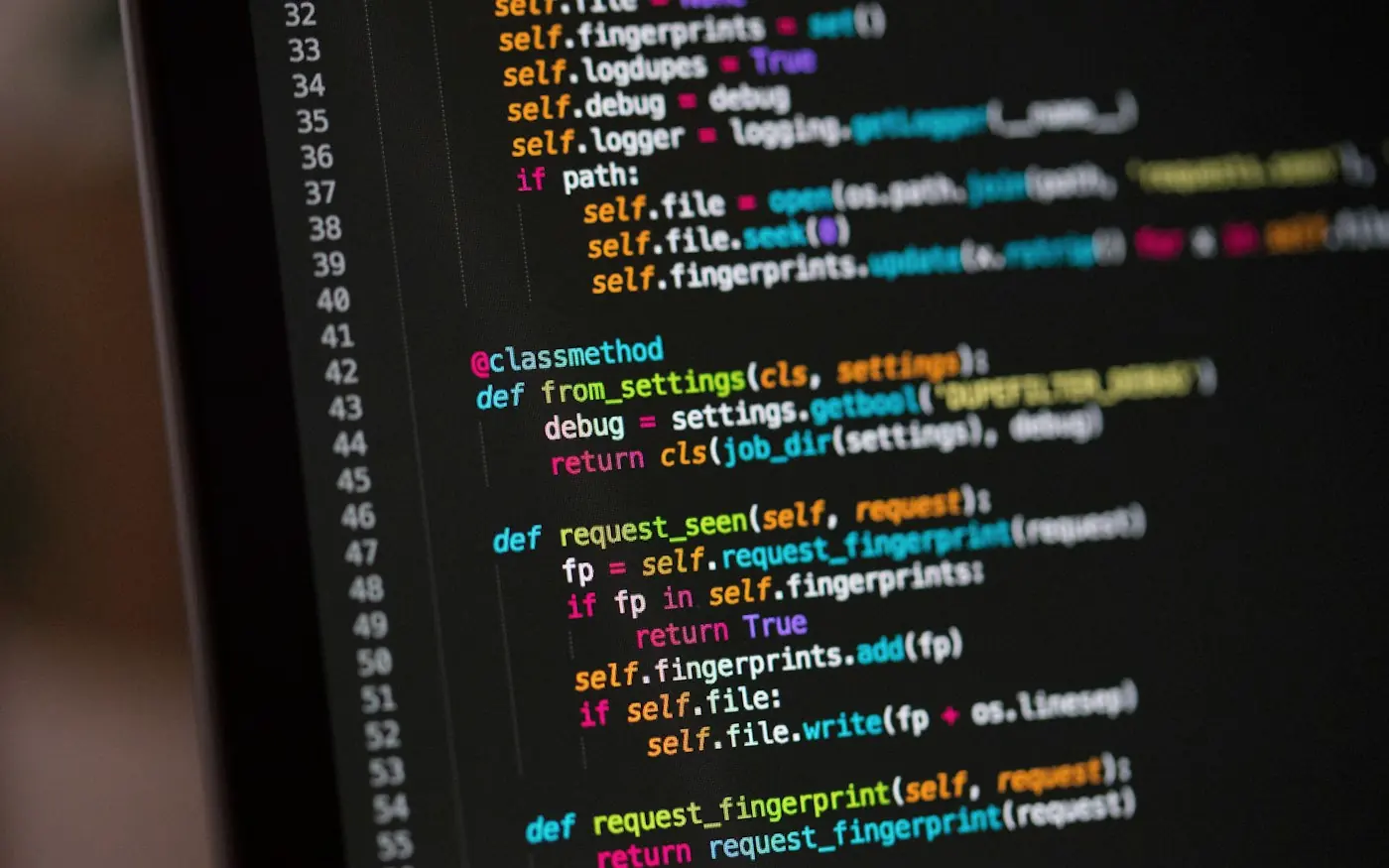
AI can produce code that looks convincing. It can also produce code that is subtly wrong. A function might handle the normal case while failing under an unusual condition. An authentication implementation might appear to work without properly enforcing permissions. A database query might be inefficient at scale. An API integration might not handle rate limits or failures appropriately. A generated dependency might introduce security or maintenance concerns.
None of this makes AI-assisted development bad. It simply means that generated code needs to be treated as implementation assistance rather than unquestionable authority.
A production system requires testing, code review, monitoring and a clear understanding of what the software is doing. Developers need to inspect AI-generated output, challenge assumptions and test failure conditions rather than simply checking whether the happy path works. The more consequential the application, the more important this becomes.
For CreativeIyke, the useful model is not AI instead of engineering. It is AI alongside engineering. AI can accelerate repetitive implementation, exploration, debugging and iteration while human judgement remains responsible for architecture, product decisions, quality and accountability.
Security Cannot Be an Afterthought
The conversation around vibe coding often focuses on speed, accessibility and creativity. Security receives considerably less attention, yet it becomes more important as AI makes it easier for people without extensive engineering backgrounds to create applications that handle real information.
A prototype containing fictional data is one thing. A production application containing customer records, financial information, payment details, employee information or health-related data is something else entirely. Authentication, authorisation, encryption, secure API handling, data validation, secrets management, logging and dependency management all become part of the product responsibility.
The same principle applies to AI itself. If an application uses a language model to generate recommendations, summaries or actions, the system needs to distinguish between information that is generated and information that is authoritative. An AI assistant should not be allowed to silently change critical business records simply because a generated response sounds confident. There should be appropriate controls, confirmations, permissions and auditability around consequential actions.
Fast development is useful. Fast development that creates an avoidable security problem is not a competitive advantage.
From Vibe Coding to Production Engineering
There is a useful distinction between vibe coding as an exploratory technique and AI-assisted engineering as a production discipline. The first is about moving quickly, experimenting and discovering what might be possible. The second is about turning those discoveries into reliable software that real people can depend upon.
A sensible development journey might therefore begin with AI-assisted exploration. Build the rough interface. Test the concept. Create a prototype. Try the workflow. Throw things away. Learn quickly. Once the product direction becomes clearer, the team can move into more deliberate engineering, tightening the architecture, improving the codebase, adding proper testing, addressing security and preparing the product for real users.
Evolutionary Progression from Discovery to Production
STAGE 01AI-assisted ideas, experiments and rapid prototypes.
STAGE 02User testing, UX refinement and product-market assumptions.
STAGE 03Architecture, security, testing, integrations and production code.
STAGE 04Performance, monitoring, automation, analytics and continuous optimisation.
Caption: The objective isn't to remain in "vibe mode". It is to use AI to move faster through discovery and validation while applying stronger engineering discipline as the product becomes real.
What Should Businesses Actually Use Vibe Coding For?
Vibe coding can be particularly powerful when the cost of experimentation has historically been a barrier. Early-stage founders can explore ideas without immediately committing to a large development budget. Product teams can prototype internal tools. Designers can test interactions. Businesses can create proof-of-concepts for potential customers. Teams can automate repetitive internal workflows and rapidly test whether an idea has enough value to justify further investment.
It can also be useful for existing businesses that have relatively contained operational problems. A company might need a small internal dashboard, a reporting tool, a lead qualification workflow or an interface that connects several existing systems. Rather than purchasing an enormous enterprise platform or commissioning a large custom project immediately, AI-assisted development can help establish what the solution should look like and whether the expected value is there.
The important qualification is that not every prototype needs to become a product. Sometimes the greatest value of a prototype is discovering that an idea is not worth building. That is a successful outcome too. A few days of structured experimentation can save months of development if it exposes a weak assumption early enough.
Where Vibe Coding Starts to Break Down
The more a product becomes critical to the business, the less appropriate an entirely informal approach to development becomes. Applications involving payments, regulated information, complex permissions, sensitive data, high transaction volumes or significant operational dependencies need stronger controls. The same applies when several developers or teams need to work on the product over an extended period.
At that point, maintainability becomes part of the business case. Someone else needs to understand the code. Future features need to be added without breaking existing functionality. Bugs need to be traceable. Deployments need to be controlled. Data needs to be backed up appropriately. Security needs to be monitored. The product needs to remain accessible and performant as the user base grows.
This does not mean abandoning AI. It means changing how AI is used. Instead of asking an AI tool to continuously patch whatever is currently broken, a mature development process uses AI within a defined architecture, with clear requirements, version control, testing, reviews and deployment practices. The AI becomes part of the engineering system rather than becoming the system itself.
The CreativeIyke Approach: AI Accelerates the Process, Not the Thinking
CreativeIyke sits at an interesting intersection between design, development and AI. We don't see these disciplines as separate production lines where one team creates a design, another writes code and another attempts to make the result useful. Modern digital products benefit from these capabilities working together much earlier.
Our Solution First process starts with Discovery & Audit, where we establish the problem, user needs, technical environment and constraints. We then Architect the experience and system, defining user journeys, interfaces, design systems, data structures and integrations before moving into development. During Build, AI-assisted development can accelerate implementation while experienced judgement remains responsible for quality, architecture and reliability. Finally, Optimise uses analytics, feedback and performance data to improve the product after launch.
This approach gives AI the role it is particularly good at: accelerating execution, exploration and iteration. It leaves humans responsible for the things that require context, judgement and accountability. That balance matters because the most successful digital products are not simply collections of technically impressive features. They are systems that make sense to the people using them and create measurable value for the organisation behind them.
The New Competitive Advantage Isn't Just Coding Speed
As AI-assisted development becomes increasingly accessible, the ability to produce code quickly will become less of a differentiator. More people will be able to create functional interfaces, connect APIs and generate applications. The technology will continue to improve, and the gap between an idea and a prototype will continue to shrink.
That makes the strategic layer more valuable, not less. Understanding customers, identifying meaningful problems, designing intuitive experiences, making sound architectural decisions and knowing what not to build become increasingly important. If everyone can build faster, the advantage shifts towards the organisations that know what deserves to be built.
This is particularly relevant for businesses investing in custom digital products. The goal should not be to boast that an application was built in a remarkably short period. The better question is whether the product has reduced costs, increased conversion, improved customer experience, created a new revenue stream, removed operational friction or enabled the organisation to do something it could not previously do.
Speed is a means. Value is the destination.
Vibe Coding Is Fast. Product Thinking Is Still the Hard Part.
The most useful way to think about vibe coding is neither to dismiss it as a shortcut nor to treat it as the end of traditional software development. It is a powerful new layer in the way digital products can be explored and built. It gives designers, founders and developers the ability to move from an idea to something tangible at remarkable speed, making experimentation more accessible than it has ever been.
But software that exists is not necessarily software that works. A product needs a reason to exist, a clear understanding of its users, an experience that makes sense, an architecture that can support it, security that can be trusted and a development process that allows it to evolve. Those things do not disappear simply because an AI model can generate the code.
The real opportunity is therefore not AI versus humans. It is the combination of AI's speed with human product thinking, design judgement and engineering discipline. That is where the technology becomes genuinely interesting. You can move faster without becoming careless, experiment without losing strategic direction and build more without forgetting why you are building in the first place.
At CreativeIyke, that's the distinction we care about. We don't use AI simply because it can build things. We use it because, when applied properly, it can help us discover, design, build and optimise better digital products.
Because the future of software isn't simply about who can build the fastest.
It's about who can build the right thing.
The CreativeIyke Vibe Coding Framework
AI accelerates the hands. Product thinking guides them.
- • Problem definition
- • User needs
- • Business goals
- • Product strategy
- • UX research
- • User journeys
- • Prototyping
- • Design systems
- • AI-assisted development
- • Frontend & backend
- • Integrations
- • Testing & deployment
- • Analytics
- • User feedback
- • Performance
- • Iteration
Have an idea you want to build with AI?
Don't start with the prompt. Start with the problem.
CreativeIyke helps ambitious businesses turn ideas into properly designed, engineered and scalable digital products, combining human-centred UX, full-stack development and intelligent AI integrations.
Let's build the right thing.
LET'S BUILD THE RIGHT THING
UX/UI designer and developer in Birmingham, UK. I design and build digital products for SaaS, fintech and public sector teams.